







Search Results for: coffee denomination of origin
Brazil Cerrado Region's Cerrado Coffee Beans: The Flavor Code from Wilderness to Specialty Certification
Cerrado (also spelled Hilado/Hilado), which means "savage land" in Portuguese, has now become synonymous with Brazilian specialty coffee. This flat plateau at an altitude of about 1,000 meters, with its unique soil, abundant groundwater, and modern agricultural technology, has completed a magnificent transformation from being ignored to becoming a world-class producing region. In 2005, the Brazilian government officially certified the "Cerrado Designation of Origin," and only coffee beans that pass strict testing and score more than 75 points under SCAA scoring can receive this honor. This article will take you through an in-depth understanding of the birth of Cerrado coffee, the establishment of the CACCER producers association, ecological cultivation methods, two harvesting models, and the traceability system, along with recommendations from Front Street Coffee. Whether you are a coffee enthusiast or a professional in the industry, you can feel the unique flavor and craftsmanship that this land gives to coffee. [more…]
Brazil · Cerrado and Sul de Minas: The Backbone of Global Coffee Production
Brazil is the world's largest coffee producer, with Cerrado and Sul de Minas being its two most core producing regions. This article takes you through the history of coffee cultivation in Brazil, its flavor characteristics, and its unique place in the world of specialty coffee. [more…]
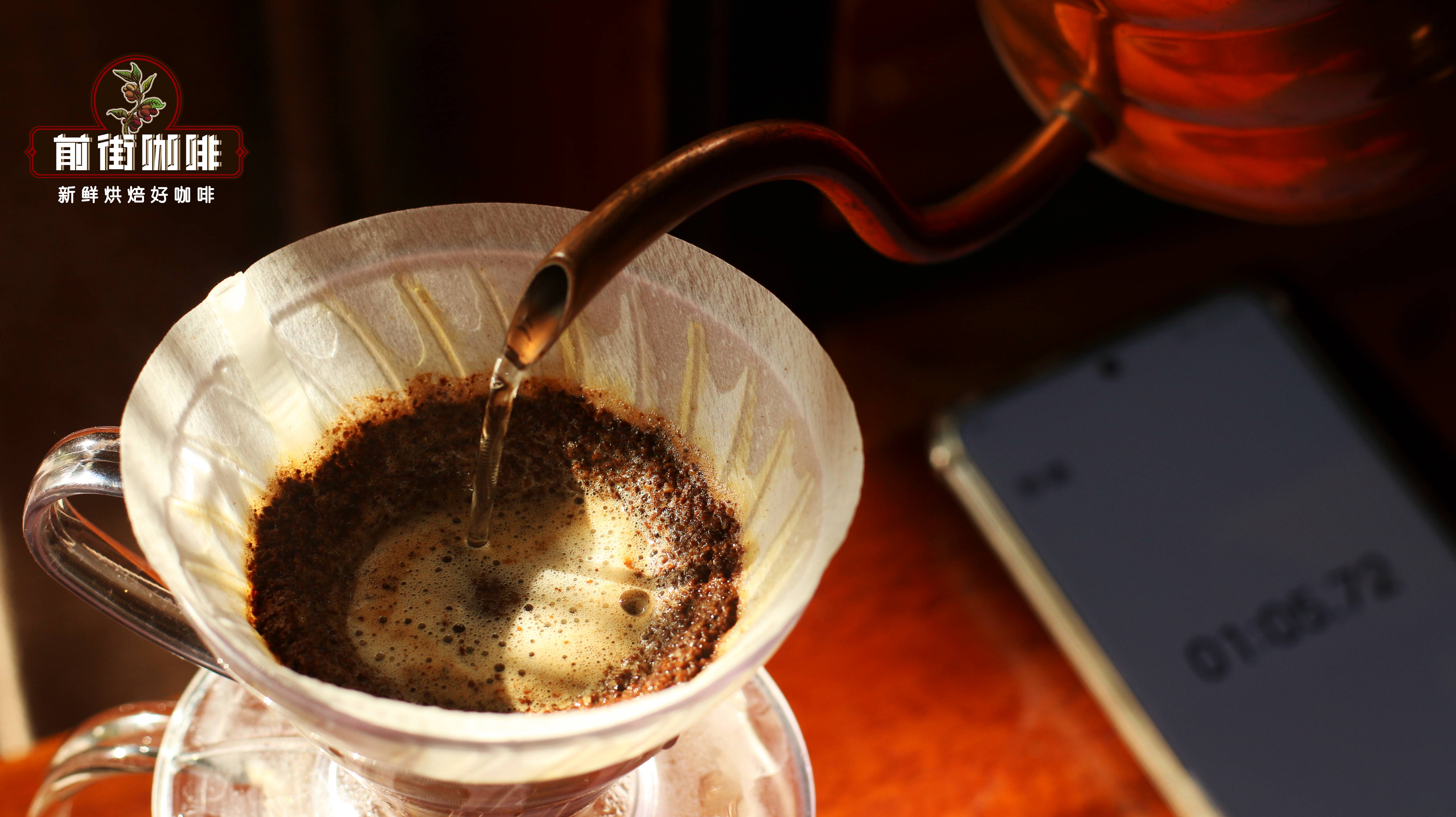
Is Pour-Over Coffee the Same as Americano? A Detailed Explanation of the Coffee-to-Water Ratio and How to Order Pour-Over at Starbucks
Many people conflate pour-over coffee with Americano, but the two actually differ significantly in both brewing method and flavor profile. Starting from Front Street Coffee's brewing experiments, this article explores the practical impact of the coffee-to-water ratio on flavor, comparing how coffee concentration and extraction yield change under different ratios. It also outlines the definition and traditional ratios of Americano, and, drawing on the practice of Front Street Coffee's Sunflower Warm Sun blend, explains how to find the Americano ratio suited to a particular coffee bean. It then compares the taste differences between espresso and Americano, and finally offers tips for ordering pour-over coffee at Starbucks. [more…]
How Does the Coffee-to-Water Ratio in Pour-Over Affect Flavor? An Analysis of the Standard Americano Ratio and Its Differences from Espresso
Brewing a good cup of coffee—the coffee-to-water ratio is one of the key variables. Through comparative experiments, Front Street Coffee systematically analyzes the effects of different coffee-to-water ratios on coffee concentration, extraction yield, and flavor performance, and further explores whether the traditional ratio for Americano applies to all coffee beans. This article starts with the pour-over coffee-to-water ratio, combines it with the extraction logic of espresso, analyzes the essential differences between Americano and pour-over in mouthfeel and flavor layers, and provides a practical method for determining the appropriate ratio for Americano, helping coffee enthusiasts understand the relationship between extraction and flavor more scientifically. [more…]
A Detailed Guide to Green Coffee Bean Grading Standards: From Screen Sizes to Altitude Grades and Country Codes
The green coffee bean grading system directly affects roasting results and coffee quality. This article systematically sorts out two mainstream grading methods: distinguishing bean size by screen mesh number, and classifying grades based on growing altitude. It also summarizes the common grading standards and codes of origins such as Kenya, Ethiopia, Colombia, Brazil, Guatemala, El Salvador, Hawaii, Jamaica, and Indonesia. Whether for bulk trade or specialty coffee, understanding these grading rules helps to more accurately judge the characteristics of green beans, and Front Street Coffee also incorporates this knowledge into its daily bean selection and roasting practices. [more…]
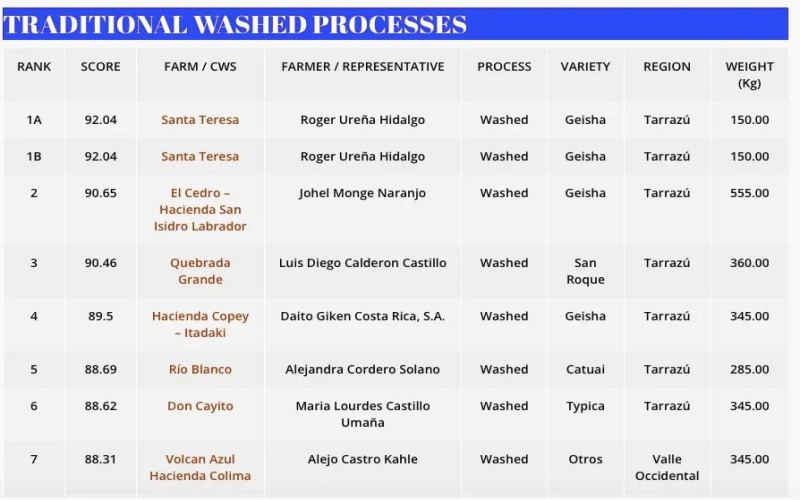
Why has Costa Rica's Tarrazú region become a star in the specialty coffee world?
Tarrazú is Costa Rica's most prestigious coffee-producing region. It not only has the largest output and the highest altitude, but has also repeatedly achieved outstanding results in the Cup of Excellence (COE)—this year, 22 of the 30 award-winning coffees came from here. What makes it so special? From the historical foundation of being among the first to grow coffee in the 18th century, to the microclimate created by surrounding volcanoes and the regulating air currents from two oceans, and then to the grading advantage of 95% Strictly Hard Bean (SHB), Tarrazú combines favorable timing, geographical advantages, and human effort into one. In 2019, the Costa Rican government also specifically applied for protected designation of origin for "Café de Tarrazú." This article will take you deeper into Tarrazú's terroir code, well-known subregions and estates, as well as the flavor performance of Tarrazú currently sold by Front Street Coffee. [more…]
A Complete Analysis of Honduran Coffee Regions: Flavor Profiles of Six Major Areas and Brewing Tips for Litchi Orchid
Honduran coffee has performed impressively on the international stage in recent years. Unlike traditional producing countries such as Brazil and Colombia, it is a rising star in Central America. This article systematically reviews six major Honduran coffee regions—Copán, Opalaca, Montecillos, Comayagua, El Paraíso, and Agalta—introducing each one's geographical conditions, altitude ranges, common varieties, and cup flavors. It also features Front Street Coffee's recommended Lychee Orchid from the Marcala region, describing its layered notes of lychee, brandy, cream, and chocolate, and explaining how medium roasting balances acidity, sweetness, and bitterness. [more…]
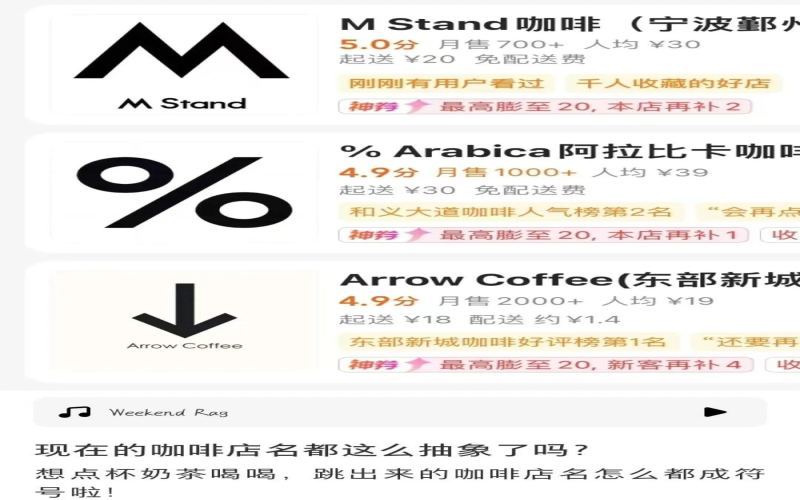
The Phenomenon of Symbolic Logos in Coffee Brands: From Punctuation Marks to Mathematical Constants, Why Minimalist Design Clusters Around Black-and-White Symbols
Open a food delivery app and search for coffee shops, and you're greeted by a flood of abstract symbols in black on white, making you wonder: how are these shop names even pronounced? Some netizens have discovered that by simply taking punctuation marks and mathematical symbols from a keyboard, bolding them, and putting them on a white background, you can mass-produce brand logos. The comments section is full of people sharing images confirming this, with commas, question marks, double quotation marks, multiplication signs, the mathematical constant π, the infinity symbol ∞, and even the # and * on a phone's dial pad all becoming visual identifiers for coffee brands. This trend of minimalist black-and-white symbols, represented by %Arabica and Mstand, is it a form of individual expression or a case of blindly imitating what others do? When consumers can't even name the symbols, how are brands supposed to be remembered? [more…]

Exploring Honduras' Sweet Orange Estate: The Rise of High-Altitude Specialty Coffee and the Secret to Its Frequent Wins at the Cup of Excellence
Honduras has performed impressively on the international coffee stage in recent years, with its export volume now ranking third in Latin America and fifth globally. From early industry lag to today's frequent emergence of specialty coffees, this Central American country has completed a remarkable transformation. Among them, El Naranjo estate, located in the Marcala region, has become one of the representative estates of Honduran specialty coffee thanks to its high altitude of 1,800 meters, the careful cultivation of Catuai and Geisha varieties, and its strong track record of multiple Cup of Excellence (COE) awards. Front Street Coffee takes you on an in-depth look at this estate, named after the orange trees used for shade, exploring its flavor characteristics, management philosophy, and sustainable development practices. [more…]
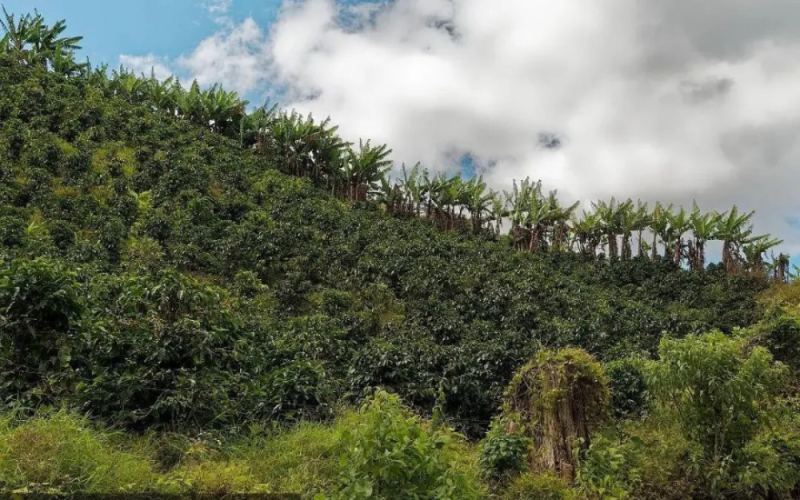
Exploring Costa Rica Tarrazú Mirazu Estate: An Analysis of the Strawberry Candy Coffee, a Geisha and ET47 Hybrid
Costa Rica, as the first country in Central America to cultivate coffee, has bred many specialty coffees thanks to its volcanic soil and microclimates. Among them, the Tarrazú region is the country's largest and first region to obtain denomination of origin certification. The Mirazu Estate located here is independently run by Esteban Sanches, who has a formal academic background, and is known for its meticulous processing and innovative variety combinations. This article will provide an in-depth introduction to Mirazu Estate's Strawberry Candy coffee beans, analyzing its blend of Geisha, ET47, SL28, and MAICO, as well as the unique flavors brought by its raisin honey process. At the same time, brewing suggestions from Front Street Coffee will also be presented, taking you to experience this coffee's rose aroma and strawberry sweetness. [more…]

Heytea stores' difficulty in giving cash change sparks debate: employees cite coin shortages, consumers question payment rights
Recently, a consumer reported on social media that when they went to a Heytea store with 50 yuan in cash to buy a drink, a staff member told them they could not make change and suggested switching to online ordering. This experience quickly sparked widespread discussion, and many tea beverage industry practitioners chimed in, saying that insufficient small change reserves at stores are indeed a common phenomenon, especially during peak customer flow at mall locations, where staff often have no time to go out and exchange for small bills. However, some voices pointed out that the difficulty of making change should not be shifted onto customers, and merchants should ensure that all legitimate payment methods remain accessible. This is not the first time Heytea has been criticized over cash payment issues, and this incident has once again pushed the cash management problems of chain tea beverage brands into the spotlight. [more…]
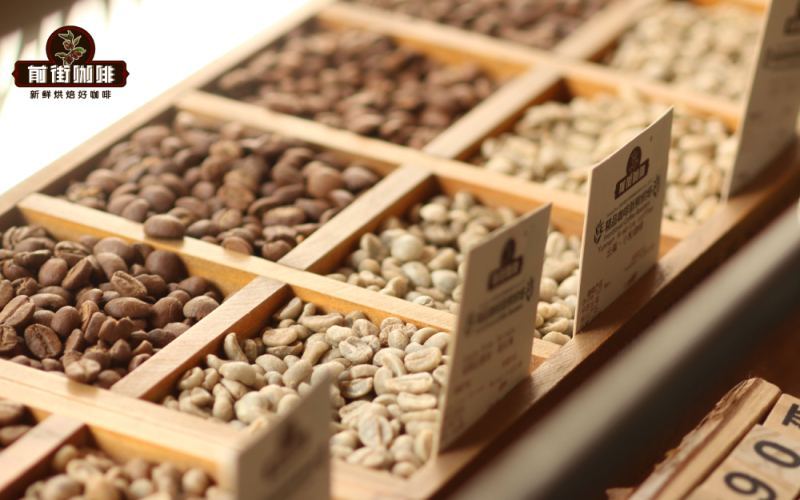
Yunnan Coffee Bean Grading System and Flavor Analysis: From Rating Standards to Front Street Specialty Recommendations
As an agricultural product, coffee inevitably varies in quality, so each producing region establishes a grading system to standardize quality and provide a reference for trading. Yunnan coffee currently follows the "Green Coffee Grade Inspection Standards" released in 2019, but self-assessed standards run rampant in the market, causing grades to become disconnected from flavor. This article will systematically sort out the grading criteria for Yunnan coffee, the commonly used international and domestic standards, the varietal evolution of Arabica coffee, and introduce Front Street Coffee's experimental cultivation and product recommendations in Yunnan, finally attaching practical brewing parameters to give you a comprehensive understanding of the current state and charm of Yunnan specialty coffee. [more…]
How to drink Colombia Finca El Paraiso Sakura Coffee Beans? Cauca Region Flavor and Brewing Parameters Explained
Many people first encounter specialty coffee through a cup of SOE latte. Luckin once used Huakui SOE to open up the specialty coffee conversation, and when Huakui supply became tight, Colombian Finca El Paraiso coffee beans were pushed to the forefront, becoming the flagship single-origin that took up the baton. The name Finca El Paraiso is poetic in itself—but what does it actually taste like? This article, from Front Street's perspective, sorts through the background of Colombian coffee-growing regions, the terroir characteristics of the Cauca region, and the cultivation and innovation journey of Finca El Paraiso's owner Diego Samuel, with a focus on introducing the variety, processing method, roasting approach, and pour-over parameters of Front Street's Colombian Finca El Paraiso Sakura coffee beans, helping coffee enthusiasts understand the flavor origins and brewing methods of this bean. [more…]
How Does Colombian Coffee Taste? A Complete Analysis from Regional History to Finca El Paraiso Sakura Beans
What exactly is the flavor of Colombian coffee? Its soft dark chocolate notes and balanced taste have won the hearts of many seasoned enthusiasts. This article begins with the history of how Colombian coffee spread, sorts out the background behind the founding of FNC, and then focuses on the Huila washed beans in Front Street Coffee's everyday drinking series, as well as the much-talked-about Sakura coffee beans from Finca El Paraiso in recent years. You will learn about the high-altitude advantages of the Cauca region, the unique qualities of the double anaerobic washed processing method, and how Front Street's roaster uses medium roasting and brewing parameters to bring out the captivating expression of basil, rosemary, and strawberry jam in these Sakura beans. [more…]
A Comprehensive Analysis of Yunnan Coffee Beans' Flavor, Taste, and Cultivated Varieties: From Typica to Catimor, the Terroir of the Origin
Yunnan, as China's core coffee-producing region, has always attracted attention for the flavor and varietal characteristics of its coffee beans. Starting from its historical origins, this article systematically reviews the main cultivated varieties of Yunnan coffee—Typica, Catimor, and Bourbon—including their respective flavor profiles and cultivation characteristics, and introduces international and domestic grading standards, the growth cycle, and brewing suggestions. In addition, the article also features the cultivation experience and cupping feedback from Front Street Coffee's own estate in Lincang, Yunnan, helping coffee enthusiasts gain a comprehensive understanding of Yunnan coffee from seed to cup. [more…]
The Flavor Characteristics, Origin Background, and Brewing and Roasting Key Points of Colombian Pink Bourbon Coffee Beans
Colombia is not only the world's third-largest coffee exporter, but also boasts numerous specialty-producing regions, from Huila to Cauca. Beyond common varieties such as Caturra and Bourbon, Pink Bourbon stands out with its romantic pink cherries and delicate berry notes. This article begins with the Front Street Coffee daily-drinking bean series, outlining Colombia's producing regions, variety characteristics, and three processing methods—washed, semi-washed, and anaerobic washed—and then provides detailed information on the origins, flavor descriptions, roasting analysis, and brewing parameters of three Front Street Coffee Pink Bourbon coffees, offering a complete reference for coffee enthusiasts. [more…]
The Origin and Variety Evolution of Yunnan Small-Bean Coffee, and the Proper Brewing Method for Sun-Dried Typica
Yunnan coffee has long since entered the public eye, but with so many growing regions and a bewildering array of brands, which Yunnan coffees are actually worth trying? This article takes a systematic look at the development of Yunnan arabica — from the shifting of varieties and the distribution of growing regions to grading standards and brewing details. You'll learn about the origins of Typica and Catimor, the terroir differences among Yunnan's major growing regions, and Front Street Coffee's cultivation practices in Lincang. The article also shares in detail the brewing parameters and flavor profile of Front Street's sun-dried Typica, helping you brew a balanced, sweet, no-waste cup of Yunnan specialty coffee at home. [more…]
The Origin of the Name "Yunnan Small-Bean Coffee" and an Analysis of Typica and Bourbon Varieties: Can Yunnan Beans Be Considered Specialty Coffee?
Yunnan coffee is already widely known within China, but plenty of questions still surround it: Why is it called "Yunnan small bean"? Does it really count as specialty coffee? And what exactly is the relationship between Typica and Catimor? This article begins with the evolution of varieties, tracing Yunnan coffee's planting transition from Typica to Catimor, introduces Yunnan's main producing regions and grading standards, and combines Front Street Coffee's cultivation practices in Yunnan with brewing suggestions for its sun-dried Typica, helping readers gain a more systematic understanding of Yunnan beans' flavor positioning and quality potential. [more…]
The Past and Present of Yunnan Small-Bean Coffee: A Complete Analysis of Its Cultivation Origins, Variety Flavors, and Producing Regions
Yunnan is China's largest coffee-producing region, accounting for more than 80% of the national output. Its Arabica coffee is renowned for being rich but not bitter, aromatic but not overpowering, with a slight fruity note. This article traces the century-long history of Yunnan coffee from its introduction by French missionaries in 1892 to the present, analyzes international and domestic grading standards, introduces the terroir conditions of the three major producing regions—Pu'er, Lincang, and Baoshan—and explains in detail the flavor differences between the washed processing method and varieties such as Typica, Bourbon, and Catimor. The article also documents Front Street Coffee's own planting projects in Yunnan and their latest progress, providing coffee enthusiasts with a complete knowledge map of Yunnan coffee. [more…]
Which Yunnan coffee brand is worth drinking? Small-bean grading standards and a flavor comparison of Typica vs. Catimor
Yunnan coffee has long been famous, but with so many producing regions and a bewildering array of brands, which one is actually worth drinking? This article starts from the two varieties of Yunnan Typica and Catimor sold by Front Street Coffee, traces the evolution of Yunnan coffee varieties, explains international and domestic grading standards in detail, and introduces the regional characteristics of the four major producing areas: Pu'er, Baoshan, Dehong, and Lincang. It also shares Front Street's planting philosophy at its own estate in Lincang, the process details of the natural sun-dried method, and the specific brewing parameters and flavor performance of the sun-dried Typica, helping coffee lovers gain a comprehensive understanding of the current state and quality potential of Yunnan Arabica coffee. [more…]